

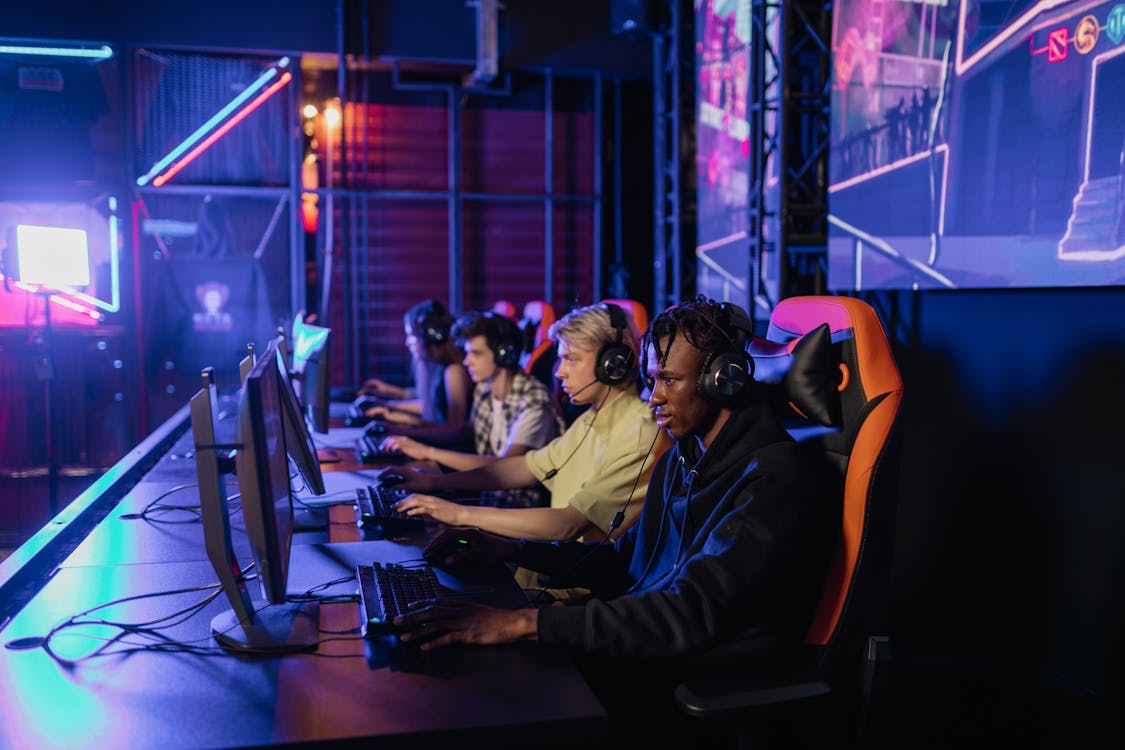
Ten years ago watching someone else play a video game was considered weird. People did not get it. Why would you watch someone play when you could just play yourself. That argument lost completely and the numbers prove it.
Twitch alone now pulls over 30 million daily visitors. YouTube Gaming runs alongside it with hundreds of millions of views every month. Competitive gaming events fill stadiums and stream to audiences that dwarf traditional sports viewership in certain demographics. The whole thing happened faster than anyone in the industry predicted.


The technology behind it changed just as fast as the audience grew.
The Technology Behind Streams Today
Early streaming was rough. A basic webcam, a microphone that picked up everything in the room including the neighbour’s dog, and a software called XSplit that half the time crashed mid-stream. Upload speeds in most homes were too slow to stream at decent quality. Viewers watched pixelated video that froze every few minutes and everyone accepted it because there was nothing better available.
The infrastructure improved on every level simultaneously. Home internet upload speeds increased dramatically across most of Europe and North America. Content delivery networks built by Twitch, YouTube, and later platforms like Kick got better at routing streams efficiently to viewers regardless of their location. Encoding software like OBS became free, powerful, and stable enough for anyone to use seriously.
Hardware caught up too. Dedicated capture cards let streamers separate their gaming PC from their streaming PC, eliminating the performance hit that used to make streaming while playing properly nearly impossible. Modern capture cards from Elgato and AVerMedia cost around 100 to 150 euro and handle 4K60 footage without breaking a sweat.
In 2026 the gap between a professional broadcast and a serious amateur stream is smaller than it has ever been. A streamer with a 500 euro setup can produce content that looks genuinely professional. The technology barrier is gone. What separates successful streamers now is content, consistency, and personality, not equipment.
AI tools entered the streaming workflow this year in a significant way. Automatic highlight detection software watches your stream in real time and clips moments where your voice pitch rises, where chat spikes in activity, or where something visually unusual happens on screen. Streamers wake up the next morning with a pre-selected collection of potential clips ready to edit. This changed the content production speed for competitive gaming content dramatically.
How Interactivity Changed Viewer Behavior
The shift from passive viewing to active participation is the most important thing that happened to streaming culture and it started with a simple feature. Chat.
Live chat sounds basic but it changed everything about how people experience watching competitive gaming. Viewers are not sitting quietly watching a match. They are talking to each other and to the streamer simultaneously. Inside jokes form in real time. Running gags develop across hours of content. Regular viewers build relationships with each other through the chat of a channel they all share.
Channel points and predictions took this further. Viewers earn points by watching and spend them on predictions about what will happen in the game. Will the streamer win this match. Will they hit a specific achievement. Suddenly viewers have a stake in the outcome beyond just hoping their favourite player does well. Engagement numbers went up sharply on channels that implemented prediction features well.
Subscription culture created a financial relationship between streamers and their audience that changed how competitive gaming was covered. A streamer with 5000 subscribers has a reliable income that lets them cover tournaments full time, travel to events, and invest in better production. This professionalized the coverage of competitive games at the mid level in a way that was impossible before streaming existed.
Extensions and overlays now show real-time statistics during competitive matches. Watch a serious Hearthstone stream today and you might see win probability percentages, deck tracking information, and opponent history all displayed live on screen. Viewers are getting analytical information during the match that helps them understand what they are watching. This closed the knowledge gap between casual viewers and hardcore fans significantly.
What Comes After Streaming
The next shift is already happening and it involves platforms like zumo-bet.nl and similar services that integrate viewing with participation in real time. Watching a competitive match and being able to act on your prediction immediately within the same platform changes the relationship between esports content and its audience in a fundamental way.
Virtual reality viewing is being tested seriously. Watching a tournament from inside a virtual arena where you can see other viewers around you, move between different camera angles, and interact with content in three dimensions is technically possible right now. The hardware adoption is not there yet but the technology works.
AI-generated commentary is already being used in some lower-tier tournaments where hiring a broadcast team is not economically viable. The quality is not at the level of good human commentary yet but it is getting closer every few months.
The audience for competitive gaming viewing is not going to shrink. The platforms will keep competing for that audience by adding features that make watching more interactive, more personalized, and more connected to the games themselves.
What started with a webcam and a bad microphone became one of the biggest entertainment categories in the world. The next ten years will move just as fast.