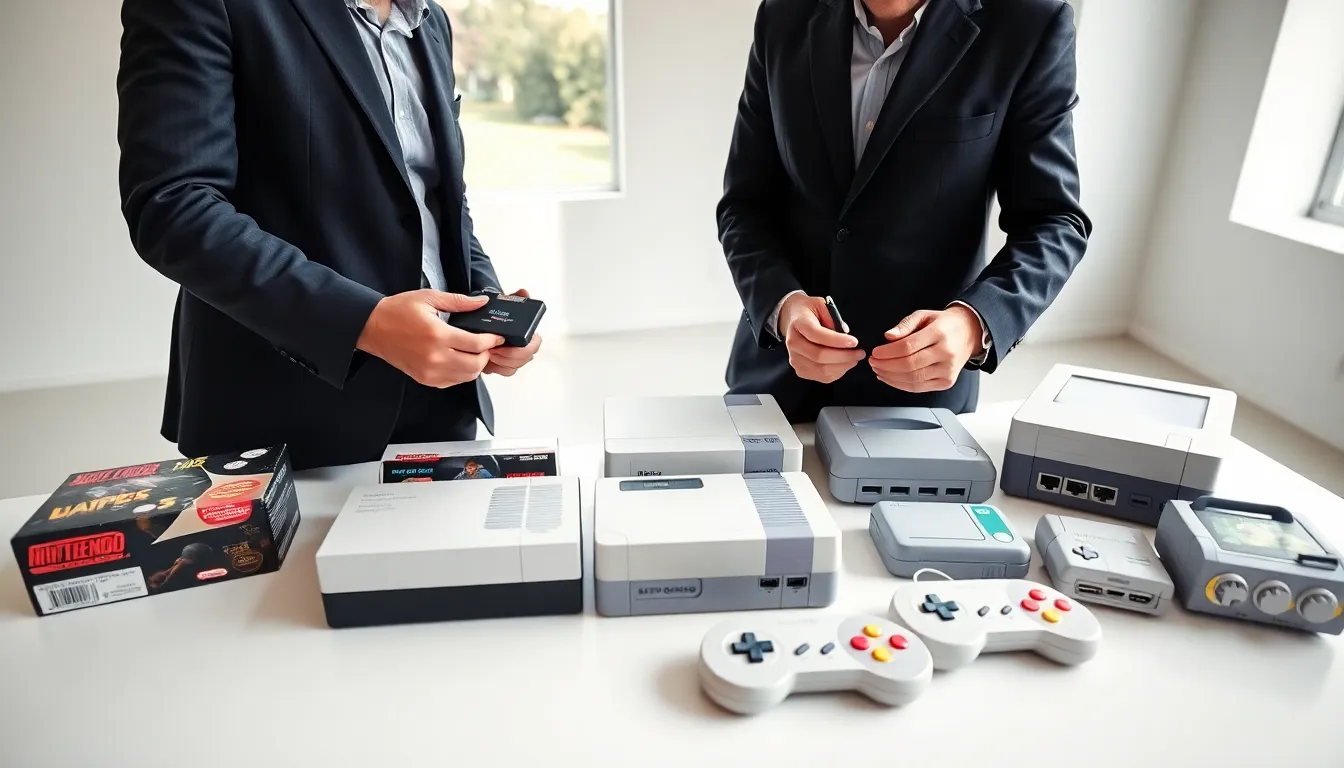


The evolution of Nintendo consoles charts hardware changes and shifts in player habits. This article explains major steps in console design, handhelds, and business moves. It shows how Nintendo moved from arcade machines to modern hybrid systems. It uses clear facts and simple sentences.
Key Takeaways
- The evolution of Nintendo consoles traces a clear timeline from arcade machines and the NES to the modern hybrid Switch, showing how hardware choices responded to player habits and market crashes.
- Nintendo leveraged flagship franchises like Mario and Zelda to drive console adoption, using first-party titles as consistent system sellers across generations.
- Handheld innovation—Game Boy’s longevity, the DS’s dual-screen/touch input, and the Switch’s portability—shifted player expectations toward short-session, on-the-go play.
- The evolution of Nintendo consoles emphasized novel controls and accessibility (analog sticks, motion controls, detachable Joy‑Con) to expand audiences rather than chase raw specs.
- Nintendo’s move to digital distribution, stronger indie support, and subscription services diversified revenue and changed how players buy and developers prioritize platforms.
The Early Years: From Arcade Roots To Home Consoles (1970s–1980s)
Key Hardware And Market Milestones
Nintendo began as a card company and it entered electronics in the 1970s. The evolution of Nintendo consoles started with arcade successes such as Donkey Kong. The company released the Color TV-Game series and it tested home demand. Nintendo launched the Family Computer (Famicom) in 1983. The Famicom later became the Nintendo Entertainment System (NES) overseas. The NES restored consumer confidence after the 1983 video game crash. Nintendo standardized cartridges, licensed third-party software, and it created a tight quality control system. Retailers accepted consoles and software again because Nintendo set clear rules.
Related articles

Signature Games And Franchises That Shaped Nintendo
Nintendo built franchises that defined its brand. The evolution of Nintendo consoles grew around Mario, The Legend of Zelda, and Metroid. Developers used those characters to sell hardware. Nintendo released Super Mario Bros. and it established platforming standards. The company released The Legend of Zelda and it expanded adventure design. Nintendo focused on first-party titles and it used those games to drive console sales. Each new console carried a set of flagship games and it used them to attract players.
The 16‑Bit Era And The Rise Of Character‑Driven Gaming (1990s)
Technological Advances And Design Choices
Nintendo released the Super Nintendo Entertainment System (SNES) in 1990. The system improved graphics and sound and it allowed richer game worlds. The evolution of Nintendo consoles during the 16-bit era emphasized tighter controls and cinematic presentation. Nintendo added Mode 7 scaling and it enabled new visual effects. Developers used those features to create more varied gameplay. Nintendo also optimized controller design and it refined button layout for complex actions.
Competitive Landscape And Market Positioning
The evolution of Nintendo consoles faced strong competition from Sega. Sega marketed speed and attitude while Nintendo marketed family-friendly characters. Nintendo maintained high sales through exclusive titles and strong retail presence. The SNES won many regional battles because Nintendo balanced technical upgrades with accessible game design. The company lost some market share in handhelds but it strengthened its brand through consistent first-party support.
Handheld Revolution: Portable Play And Innovation
Design Evolution From Monochrome To Color To Dual‑Screen
Nintendo released the Game Boy in 1989 and it changed portable gaming. The evolution of Nintendo consoles in handhelds began with long battery life and simple controls. Nintendo later released the Game Boy Color and it added palette improvements. Nintendo launched the Game Boy Advance and it increased processing power. The company then released the Nintendo DS and it added a dual-screen layout. The DS introduced touch input and it broadened audience appeal. Each handheld iteration focused on playtime, controls, and software library.
Influence On Mobile Gaming And Player Habits
The evolution of Nintendo consoles affected player habits and market expectations. Handheld success proved that players wanted gaming on the go. Nintendo inspired later mobile developers to consider short play sessions and simple controls. The company retained a strong position by linking handhelds to first-party franchises. Game design adapted to shorter sessions and repeated plays. Developers created games that fit commutes and waits and they increased daily engagement.
The 3D Transition And Experimentation (Late 1990s–2000s)
From Fixed Cameras To Open Worlds: Gameplay Shifts
Nintendo moved to 3D with the Nintendo 64 in 1996. The evolution of Nintendo consoles in 3D required new design thinking. Nintendo invented analog sticks and it allowed free camera control. The company released Super Mario 64 and it redefined platforming in three dimensions. Developers created larger levels and they emphasized exploration. Nintendo supported both fixed-camera design and open-world ideas depending on game needs.
Console Accessories And Novel Controllers
Nintendo tested unconventional controllers and accessories across this period. The company released the Rumble Pak and it added force feedback. Nintendo later released the GameCube and it improved connectivity with accessories. The company unveiled the Wii and it used motion controls to reach nontraditional players. The Wii shifted Nintendo away from raw performance and it focused on new ways to play. These choices shaped how players perceived hardware value and it influenced third-party design.
Modern Nintendo: Hybrid Consoles And New Business Models (2010s–Present)
The Rise Of The Hybrid Concept And Portability As A Feature
Nintendo released the Switch in 2017 and it combined home and handheld modes. The evolution of Nintendo consoles took a hybrid turn with the Switch. Nintendo designed the hardware to detach from docks and it allowed seamless home-to-portable transition. The Switch sold strongly because it offered flexibility and strong software. Nintendo continued to support first-party titles and it encouraged third-party ports and unique indie releases.
Digital Distribution, Indie Support, And Online Services
Nintendo expanded digital storefronts and it added eShop features. The evolution of Nintendo consoles included digital sales and downloadable content. Nintendo increased indie support and it created new revenue streams. The company improved online services and it offered subscription options. These changes altered how players buy games and how developers prioritize platforms.
Nintendo’s Design Philosophy And Long‑Term Impact
Prioritizing Gameplay, Accessibility, And First‑Party IP
Nintendo emphasized gameplay and accessibility across generations. The evolution of Nintendo consoles favored simple inputs and clear goals. Nintendo relied on first-party IP to sell hardware. The company focused on fun and repeat plays rather than raw specs. This focus helped Nintendo reach casual players and core fans.
How Nintendo Influenced Competitors And Industry Trends
Nintendo influenced competitors with unique hardware choices and gameplay focus. The evolution of Nintendo consoles pressured other companies to explore new control methods and business models. Other firms copied hybrid ideas and motion control concepts. Nintendo’s approach shaped platform expectations and it widened the audience for video games.