
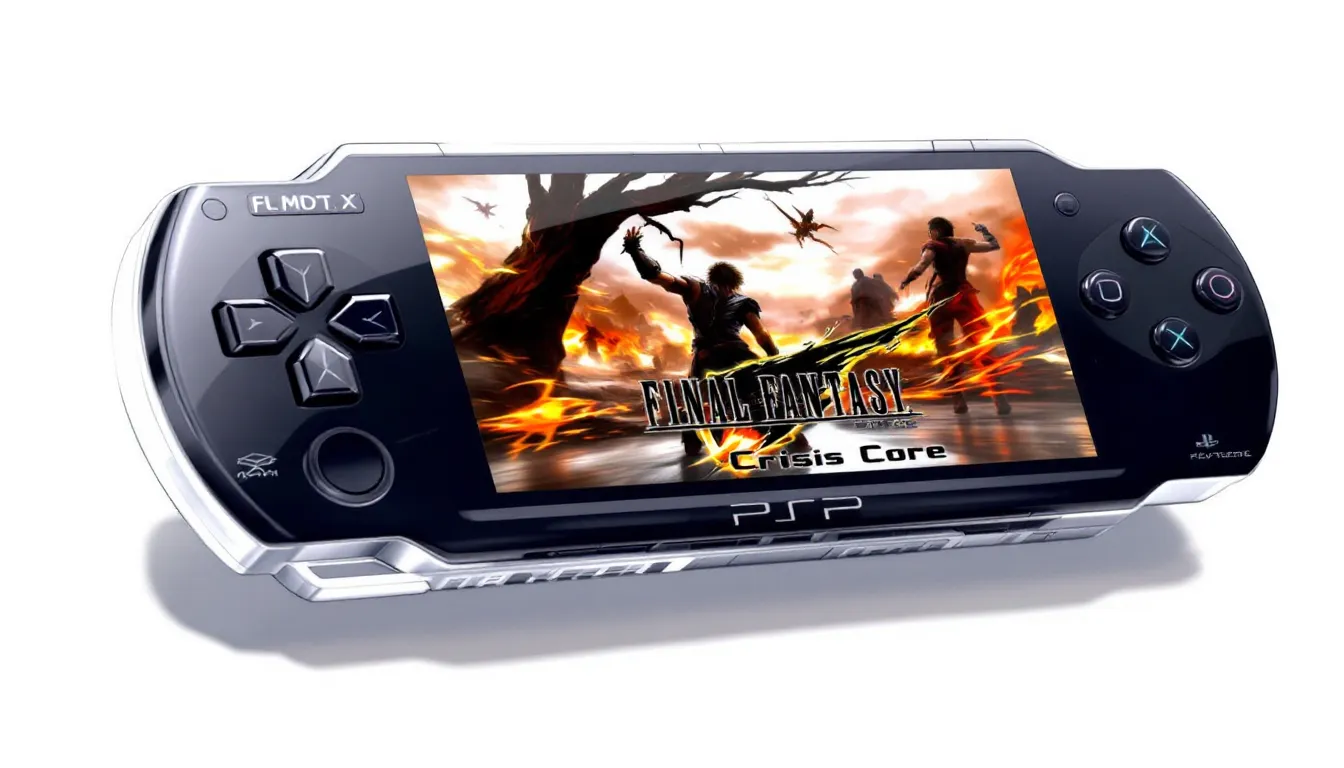
The PSP might’ve been a handheld console that peaked in the mid-2000s, but its Final Fantasy library remains legitimately exceptional. Between 2004 and 2012, Square Enix absolutely loaded the PlayStation Portable with Final Fantasy games that didn’t feel like mobile compromises, they were full, meaty experiences designed specifically for the system. Whether you’re hunting for a story-driven action game, tactical strategy, or pure fighting game nostalgia, the PSP Final Fantasy catalog has something that’ll hook you. This guide breaks down every major Final Fantasy PSP game worth your time, from the genre-defining Crisis Core to the underrated gem that is Type-0, so you can figure out which one matches what you’re looking for right now.

Key Takeaways
- Final Fantasy PSP games delivered full, meaty experiences across multiple genres—from action-RPGs to tactical strategy to fighting games—without feeling like mobile compromises.
- Crisis Core pioneered real-time action combat on PSP and remains a masterpiece with an emotionally devastating story featuring Zack Fair that stands independently from Final Fantasy VII.
- Final Fantasy Tactics: The War of the Lions is the definitive tactical strategy RPG with deep job system customization and challenging midgame difficulty spikes that reward strategic thinking.
- Type-0 offers fast-paced, chaotic combat with a 14-character roster and a bleak war story that treats conflict seriously, delivering legitimate difficulty without traditional turn-based safety nets.
- Dissidia 012 proves fighting games can work within unexpected franchises, featuring a unique Bravery system and balanced roster that creates depth beyond button-mashing gameplay.
- Modern accessibility options—including Crisis Core Reunion remake, iOS ports, PS4 remasters, and stable PPSSPP emulation—make Final Fantasy PSP games still playable and worth experiencing in 2026.
A Brief History Of Final Fantasy On The PSP
When the PSP launched in 2004, Square Enix saw an opportunity. The handheld wasn’t as powerful as home consoles, but it could run complex games with real depth. They didn’t just port old Final Fantasy titles, they created new entries and remakes that actually justified owning them on PSP.
Crisis Core dropped in 2007 and became an instant classic, proving that action-based Final Fantasy games could thrive on portable hardware. Dissidia followed in 2008, reinventing the series as a 1v1 fighting game that somehow worked brilliantly. Then came Type-0 in 2011, a game so ambitious it made you wonder how they fit everything into a UMD. Meanwhile, ports and remakes of the original games kept older fans engaged.
The PSP’s Final Fantasy library peaked between 2007 and 2012. After that, as the PS Vita and mobile gaming fragmented the handheld market, support waned. But the games that dropped during those glory years remain solid even in 2026. Some hold up better than others, and some are genuinely better played via emulation or the remasters Square later released for other platforms, but they’re still worth experiencing if you’re serious about Final Fantasy.
One thing that makes the PSP era stand out: Square wasn’t afraid to experiment. You got action games, strategy games, fighting games, dungeon crawlers, and straight-up RPGs all under the same franchise banner. That willingness to branch out is partly why this library feels so rich.
Final Fantasy VII Crisis Core
Gameplay And Combat System
Crisis Core: Final Fantasy VII pioneered the action-RPG format on PSP and basically defined what handheld Final Fantasy action combat could be. You’re controlling Zack Fair in real-time, slashing enemies with a sword while managing materia loadouts and limit breaks. It’s not turn-based: it’s pure action, and the combat feels snappy even though the hardware limitations.
The Materia Fusion system gives you tons of build variety. You’re not just equipping materia: you’re combining them to create custom spells and abilities. That depth kept people grinding and experimenting for hundreds of hours. The camera occasionally gets janky, especially in tight dungeon spaces, but it doesn’t kill the experience.
One standout mechanic: the Digital Mind Wave (DMW) system. It’s a slot machine that triggers during combat, when numbers match up, Zack unleashes powerful abilities or gets stat boosts. Some players hate it because it’s RNG-dependent: others love it because it adds unpredictability to fights. Either way, it’s thematically perfect for the character.
Boss fights actually require strategy. You can’t just mash attack: you need to manage your ability rotations, healing, and positioning. The Limit Break system feels earned when you trigger it, and some boss encounters are legitimately challenging, even in 2026 standards.
Story And Characters
Crisis Core’s story is the prequel to Final Fantasy VII, but here’s the thing: you don’t need to have played FFVII to care about what happens. Zack’s journey from idealistic SOLDIER to broken man is emotionally devastating, and the game earns every gut punch it throws at you.
Zack himself is charismatic in a way that makes him stand out from Cloud. He’s got this infectious energy, genuinely likable even when he’s being impulsive. His relationships with Aerith, Sephiroth, and the other characters in Midgar feel personal and matter by the ending.
The supporting cast, especially Aerith, get real development here. You’re seeing a different side of FF7’s world, and it recontextualizes scenes from the original game. If you’ve played FFVII Remake, Crisis Core hits even harder because you’re seeing both sides of the same story coming into focus.
The ending remains one of the most crushing finales in gaming. You know where it’s going, but watching it unfold anyway and actually getting attached to Zack makes it brutal. That’s expert storytelling, especially for a PSP game. The English voice acting is solid across the board, no cringeworthy dialogue or wooden performances.
Final Fantasy Tactics: The War Of The Lions
Turn-Based Strategy Mechanics
Final Fantasy Tactics: The War of the Lions is a PSP remake of the original PlayStation classic, and it’s genuinely the definitive version of that game. This is turn-based tactical strategy at its finest, you’re moving units on a grid, managing ranges and elevations, and executing combo attacks that feel incredibly satisfying when they land.
The job system is the heart of the experience. You can mix-and-match classes for your characters, combining abilities from different jobs to build broken-as-intended combos. Want a Knight with Wizard magic? Done. A Priest that steals? Absolutely. There’s almost no “wrong” way to build your team, which means experimenting is encouraged.
Tactical positioning matters constantly. Elevation changes hit-chance and damage. Flanking mechanics reward smart positioning. Enemy AI is competent enough to punish bad positioning, which means late-game battles demand actual strategy, not just “throw your strongest abilities and win.”
There’s a steep difficulty spike around midgame that can blindside you if you’re unprepared. Some boss fights are genuinely brutal, and you might need to grind or rethink your team composition. That’s not a flaw, that’s the game respecting your intelligence.
Enhanced Features And Improvements
The War of the Lions remake added features that make it superior to the original PS1 version. The translation got completely reworked, though some of the new dialogue is admittedly a bit flowery (“Thou shalt perish.”). Even though some awkward phrasing, it’s more accurate to the Japanese original and reads better overall.
New Tutor Job classes, additional multiplayer battles, and a better UI make the remake less clunky to actually play. The Errand system lets you grind offscreen, which saves you from mindless farming. The graphics got a modest bump, and characters look sharper than before.
Load times are longer than you’d want on actual PSP hardware, this is one reason emulation or the recent iOS port makes sense in 2026. But mechanically, nothing’s been compromised. This is still the deep, complex strategy game it’s always been.
The story remains a political masterpiece. Ramza’s journey through a nation tearing itself apart parallels better than some actual war novels. The plot twists genuinely land, the characters feel real, and by the ending you’re emotionally invested in every major decision the narrative makes.
Final Fantasy Type-0
Real-Time Action Combat
Final Fantasy Type-0 is the chaos gremlin of the PSP Final Fantasy lineup. This is an action RPG where you’re managing a 14-character roster, switching between them mid-battle to keep momentum. Combat happens in real-time, no pause menu to let you plan, no turn-based safety net. You’re dodging, spamming attacks, managing stamina, and trying not to die while everything explodes around you.
The combat feels more like a musou game mixed with Devil May Cry than traditional Final Fantasy. You’ve got light and heavy attacks, abilities tied to your class, and screen-filling special moves. The pacing is relentless, which sounds exhausting but actually keeps you locked in.
Character switching is crucial. Each character has different weapon ranges, speed stats, and ability rotations. Playing as Ace (fast, ranged) feels completely different from Machina (slow, tanky) or Rem (healing, support). Boss fights will punish you if you’re trying to solo them with one character: you need to rotate your squad strategically.
Difficulty spikes harder than a speedrunner hitting frame-perfect inputs. Regular enemies hit like trucks, bosses are genuinely dangerous, and healing is limited. The game demands you understand your character’s kit and practice positioning. That’s not for everyone, but for people who like a challenge, it’s refreshing.
Peristylium Academy And Class System
Type-0 sets you in an military academy during wartime. The story doesn’t hold back, it gets dark, genuinely tragic, and makes you reconsider what it means to be a soldier. The Peristylium Academy is your home base, and supporting characters feel like actual classmates you’re fighting alongside.
The class system is insanely deep. Every student at the academy can be leveled, geared, and trained. You can ignore half your roster if you want, but you’re leaving potential on the table. The optional side missions let you develop relationships with classmates, which adds stakes to seeing them struggle or fall in story moments.
Type-0’s tone is aggressively different from mainline Final Fantasy games. This isn’t a heroic adventure where the good guys win. It’s a war story where morality gets gray, soldiers die meaninglessly, and victory comes with massive costs. The ending is bleak in a way that stays with you.
The story payoff is earned. The game doesn’t waste your time. Every character moment, every side quest, and every piece of lore slots into place by the ending. This is one of the most underrated Final Fantasy games partly because it released on PSP near the end of the console’s life, and partly because it was later ported to PS4 with mixed reception. Playing the original PSP version, or through emulation or ports available today, is the best way to experience it.
Final Fantasy Dissidia Series
Fighting Game Foundation
Dissidia Final Fantasy took a massive swing in 2008: turn FF into a 1v1 fighting game. The original and Dissidia 012 (the expanded sequel) both work even though how weird that premise sounds on paper. The fighting system isn’t button-mashy, it’s got depth with a bravery and HP system that’s totally unique.
Bravery determines your damage multiplier. You spend it to deal extra damage on HP attacks, or you can dump your bravery for defensive maneuvers. Managing bravery creates genuinely strategic gameplay where you’re not just mashing buttons. It’s turn-based fighting if that makes sense, timing and positioning matter more than raw reflexes.
The combat has multiple layers. You’re managing range, spacing, ability cooldowns, and summons. The summon system essentially acts as a comeback mechanic that hits hard but has long startup. Top-level play sees players baiting out summoned abilities and punishing the recovery frames.
The original Dissidia is a solid one-on-one fighting game: Dissidia 012 is the expanded version with more characters, better balance, and a story mode that actually has meat on it. If you’re emulating or looking to play today, go for 012. It’s the definitive version.
Roster And Fan Favorites
The roster pulls from across the entire FF franchise. You’ve got Cloud, Squall, Cecil, Zidane, Tidus, and Vaan from the numbered games. But you also get Kefka, Jecht, Exdeath, and other villain/supporting characters. The variety means everyone’s got a fighter they click with.
Character balance is actually tight. Some characters have matchup advantages, but no one’s so broken that they autowin. The meta shifts depending on player skill and familiarity. Watching pros play Dissidia is surprisingly entertaining because the strategy depth doesn’t feel obvious until you’re watching someone who actually knows what they’re doing.
The original game’s story is a tournament between heroes and villains in an interdimensional space. Dissidia 012 expands that with a prequel story and alternate takes on the original characters’ arcs. The story isn’t groundbreaking, but it’s earnest and gives context to why all these characters are fighting.
Fan favorites rotate depending on who you ask. Lightning players swear by her mobility. Cloud players appreciate his damage output and iconic status. Squall maintains a loyal cult following. There’s no “best” character, matchups and player skill matter infinitely more. The fighting game community’s coverage of PSP fighting games occasionally highlights Dissidia tournaments and how it holds up against modern fighting games.
Other Notable Final Fantasy PSP Titles
Final Fantasy I, II, And IV Remakes
Square Enix wasn’t content with just new games on PSP. They remade some of the original NES games, modernizing them for contemporary audiences. Final Fantasy I and II got straight ports with updated graphics and quality-of-life features. They’re playable but honestly feel more like historical curiosities than must-plays.
Final Fantasy IV got the best treatment. It’s not just a port, it’s a full remake with updated sprites, new dungeons, and expanded story content. If you’ve never experienced FF4 and want to try it, the PSP version is actually pretty good. It’s turn-based, the job system’s engaging, and the story still holds up. The difficulty ramps up more than modern RPGs, so expect some grinding if you’re underleveled.
These remakes are solid but optional. If you’re specifically curious about playing classic Final Fantasy games, they’re available on basically every platform now. The PSP versions work, but they’re not the definitive way to play them anymore.
Anthology And Spinoff Experiences
Final Fantasy: Dissidia Duodecim 012 Opera Omnia was a mobile spinoff that expanded the Dissidia universe. It’s not on PSP, but it represents how Square continued the Dissidia brand beyond the handhelds.
There were also dungeon crawlers, remakes, and other obscure PSP Final Fantasy titles. Final Fantasy Agito XIII was a mobile game that later became Final Fantasy Type-0. Dissidia Duodecim 012 had a side mode called Report System that unlocked character backstories, effectively being a visual novel within the fighting game.
The thing about PSP-era Final Fantasy spinoffs is that they were experiments. Not all of them worked. Some were regional exclusives. But what mattered was that Square was willing to try wild concepts. That experimental spirit is partly why the PSP library feels so varied and interesting even now. Coverage of older JRPG titles occasionally revisits these PSP games with retrospectives.
Which PSP Final Fantasy Game Should You Play?
Choosing Based On Your Preferred Genre
If you want action RPG, Crisis Core is your call. Nothing else on PSP beats it for story and combat together. You’re getting 40+ hours of legitimately engaging gameplay with a protagonist you’ll care about.
If you want tactical strategy, Final Fantasy Tactics: The War of the Lions is the answer. It’s deep, challenging, and rewards thinking multiple turns ahead. Go in expecting a learning curve, but you’ll unlock hundreds of hours of content through experimenting with job combinations.
If you want fast-paced action, Type-0 is unhinged in the best way. The combat is chaotic, the difficulty is real, and the story hits different because it treats war seriously. It’s also the shortest game on this list, around 30-35 hours, so it’s a solid commitment without being a 100-hour saga.
If you want fighting games, Dissidia 012 is the go-to. It’s got depth for competitive players and enough single-player content that casual players won’t feel abandoned. Expect a learning curve with the Bravery system, but it clicks once it does.
If you want pure narrative, Crisis Core still edges out the competition. The story is tight, the pacing never drags, and the emotional payoff earned. Final Fantasy Tactics matches it for storytelling depth but from a different angle, epic political narrative versus intimate character journey.
Emulation And Accessibility Today
Here’s the real talk: actually owning a PSP and UMDs in 2026 is possible but expensive. Your better options are emulation, modern ports, or re-releases Square has done since the PSP era ended.
Crisis Core got a full remake called Crisis Core: Final Fantasy VII Reunion for PS4, PS5, Xbox, and PC. It’s technically a different experience, real-time combat instead of the original action-RPG feel, updated graphics, but the story’s intact and the gameplay’s arguably better. Unless you’re purist about playing the original version, Reunion is the path of least resistance.
Tactics: The War of the Lions got ported to iOS and Android. Playing it on a phone is genuinely solid. The controls translate well, the grid-based strategy doesn’t suffer, and you can pick it up in 20-minute chunks.
Type-0 got ported to PS4 as Final Fantasy Type-0 HD. It’s an HD upscale, not a full remake, so the PSP jank is still there but prettier. It’s also available digitally on multiple platforms.
Dissidia games are PSP-exclusive unless you count the arcade version or the mobile spinoff. Emulation’s your option here if you want to play them.
The honest take: emulation on PC through PPSSPP is the most convenient way to play all of these in 2026. The emulator is stable, upscaling is fantastic, and load times are shorter than actual PSP hardware. If that’s not your thing, the individual ports and remakes Square released cover most of the must-plays.
Conclusion
The PSP Final Fantasy library is legitimately exceptional, a time capsule of when Square Enix was willing to experiment with the franchise across multiple genres and platforms. Crisis Core remains a masterpiece of character-driven storytelling. Tactics: The War of the Lions is still one of the deepest tactical RPGs ever made. Type-0 is an underrated gem that deserves more love. And Dissidia proved that fighting games could work in unexpected franchises.
You don’t need to play all of them, but at least one belongs on your list if you’re serious about Final Fantasy. Your pick depends on what kind of game speaks to you, the action-RPG experience, the tactical challenge, the chaotic action, or the fighting game system.
The PSP’s era has ended, but these games haven’t aged out of relevance. They still offer compelling gameplay, engaging stories, and the kind of depth modern handhelds sometimes overlook. Whether through emulation, modern ports, or remakes, these games are still accessible. Pick one, block out some time, and experience why the PSP became a destination for Final Fantasy fans. Your gaming library will be better for it.