
Gaming‘s become part of adult life in a way it never was before. Whether you’re unwinding with a few rounds of Call of Duty after work, grinding ranked matches on weekends, or sinking hours into story-driven epics, the question isn’t whether adults should game, it’s how much is actually healthy. The thing is, there’s no universal answer because health doesn’t work that way. But there is research, and there are patterns, and knowing how to read them helps you figure out what “healthy gaming” looks like for you specifically. This guide breaks down what science actually says about gaming duration, how your individual situation matters, and how to build a sustainable routine that keeps gaming fun instead of burning you out.


Key Takeaways
- Research suggests 1-2 hours of daily gaming for healthy adults maintains stress relief and cognitive benefits without disrupting sleep, work, or relationships.
- Healthy gaming habits depend on individual life factors like work demands, physical health, and sleep quality rather than a fixed hour limit.
- Warning signs of excessive gaming include sleep disruption, irritability when unable to play, neglecting responsibilities, and using gaming as the only emotional coping mechanism.
- Moderate gaming offers proven mental health benefits including stress reduction, social connection, achievement, and cognitive engagement when balanced with exercise and in-person socializing.
- Gaming disorder—characterized by loss of control and negative consequences rather than hours played—warrants professional support from therapists specializing in behavioral addictions.
- Building a sustainable gaming routine requires intentional scheduling, regular breaks during sessions, ergonomic setup, and diversified game types to prevent compulsive patterns.
Understanding Healthy Gaming Habits For Adult Gamers
Healthy gaming habits aren’t about hitting some magic number of hours per week. They’re about balance, intentionality, and how gaming fits into your overall life. An adult who plays 4 hours on Saturday but has a full social life, exercises regularly, and sleeps well is in a completely different situation than someone playing 4 hours every single day while neglecting everything else.
The gaming landscape has shifted dramatically. You’ve got casual players splitting time between work, family, and hobbies. You’ve got esports athletes and streamers treating gaming like a job, because it is one. You’ve got people using games therapeutically for anxiety and stress relief. These aren’t comparable scenarios, which is why generalizing “healthy” gaming is tricky.
What we can say is this: healthy gaming means your gaming doesn’t interfere with sleep, work, physical health, or relationships. It means you’re playing because you want to, not because you feel compelled to. And it means you can stop when you need to without feeling withdrawal or distress. Those are the real markers, not a specific hour count.
Adults have lives that are inherently more complex than younger gamers. You’re managing careers, relationships, financial obligations, and physical health. Gaming needs to fit into that ecosystem without crowding out the other pieces. That’s the foundation of what we mean by healthy gaming for adults.
What Does The Research Actually Say About Gaming Duration
Research into gaming and adult health has gotten way more rigorous over the past five years. Studies from institutions like the University of Rochester and various psychology departments have been tracking how much gaming correlates with well-being, not just treating all gaming as a monolith.
Here’s the nuance: moderate gaming, roughly 3-4 hours per week for leisure gamers, or split into smaller sessions, shows positive effects on stress relief, cognitive function, and social connection when gaming is done with others. But the curve flattens and even reverses past a certain point. Daily sessions of 3+ hours start showing correlations with sleep disruption, physical inactivity, and reduced engagement with non-gaming responsibilities.
The American Psychological Association hasn’t set a hard threshold like the WHO did with screen time for kids, but the data suggests that for adults managing work, health, and relationships, 1-2 hours per day as a general baseline keeps gaming in the recreation zone rather than the compulsion zone.
What matters is consistency. Binge gaming during a weekend is different than daily 8-hour grinds. A gamer who plays 2 hours on Monday, Tuesday, and Wednesday but takes Thursday completely off is in a different ballpark than someone doing 2 hours every single day. Context includes your life stage, job demands, and whether gaming is replacing sleep or replacing something else like downtime you’d spend watching TV.
The 1-2 Hour Daily Sweet Spot: What Science Recommends
The evidence keeps pointing to a similar zone: 1-2 hours daily for recreational gaming offers enough time to genuinely unwind and stay engaged with your gaming communities or story progress, without cutting into sleep or other health priorities. This assumes 7-9 hours of sleep, regular physical activity, and actual face-to-face social time.
For context, that’s roughly 7-14 hours per week if you’re playing every day, or you could do 3-4 longer sessions on weekends and nothing on weekdays. Some gamers operate on a 5 hours on Saturday, 5 hours on Sunday schedule and zero during the week. That’s still hitting the healthy zone as long as nothing else is getting neglected.
Professional gamers and streamers are the exception here. They’re treating gaming as a career, not a hobby, which means the normal recreational rules don’t apply. They’re managing their fatigue the way athletes do: monitoring burnout, scheduling recovery, and working with coaches or mental health professionals who understand the grind. If you’re not making money from gaming, this standard probably doesn’t apply to you.
The data also suggests that consistency matters more than absolute hours. Someone playing 8 hours once a month is different than someone playing 2 hours every day for a month. Regular habit formation is where problems typically start, not occasional marathon sessions.
How Individual Factors Affect Your Healthy Gaming Limit
The “1-2 hours daily” recommendation is a starting point, not a final answer. Your actual healthy limit depends on your life, your health, and your gaming situation.
Work, Life Balance, And Gaming Commitments
Your job is the first variable. Someone working 9-to-5 has different capacity than someone working nights, freelancing, or in a seasonal job. A person with caregiving responsibilities, kids, aging parents, partner, has less buffer for gaming time than someone living solo.
Listen, if you’re working 50+ hours a week, commuting, managing a household, and gaming 3 hours every night, something’s getting sacrificed. Usually it’s sleep or quality time with people who matter. That’s not a moral failing: it’s a math problem. Your available leisure time is finite, and gaming is competing with everything else.
Gaming communities also factor in. If you’re part of a raid group, competitive team, or streamers with an audience expecting regular content, you’ve got social and professional obligations tied to gaming time. That changes the calculus. A casual player can take a week off whenever. Someone with a raid team or streaming schedule can’t without letting others down. That built-in commitment affects what’s sustainable.
If you’re gaming 2 hours daily but that’s the only thing you do for yourself, no exercise, no reading, no hobbies outside gaming, that’s a different profile than someone gaming 2 hours daily, hitting the gym, maintaining friendships, and having other interests. The hours are the same, but the context is completely different.
Physical And Mental Health Considerations
This is where it gets personal. If you’ve got existing mental health conditions, depression, anxiety, ADHD, gaming might be providing real therapeutic value, or it might be enabling avoidance. You’d want to know which. Some gamers find that gaming actually stabilizes their mental health by providing structure, achievement, and social connection. Others find it becomes an escape that makes the underlying issues worse when they log off.
Physically, sitting for hours correlates with a bunch of stuff: back pain, eye strain, blood clots, metabolic issues. The longer your sessions, the more you need to counterbalance with movement. This isn’t unique to gaming, it applies to programming, writing, or any sedentary work, but gamers often underestimate how much sitting time compounds when you’re already working a desk job and then gaming 3+ hours at night.
Sleep is the biggest health factor. Gaming late into the night, especially competitive games or high-stimulation titles, can suppress melatonin and keep your nervous system ramped up when it should be winding down. If your gaming habit is causing you to sleep 6 hours instead of 7-8, that’s a health hit that no amount of gaming benefits can offset. Sleep deprivation compounds everything: immune function, mood, cognitive performance, decision-making.
Age matters too. A 25-year-old’s body and sleep architecture is different than a 45-year-old’s. Recovery is faster, sleep tolerance is higher. But cognitive load, eye fatigue, and sitting time don’t discriminate by age. The 45-year-old gamer might need to be more intentional about posture, breaks, and sleep hygiene because recovery isn’t automatic anymore.
If you’ve got any health condition, vision issues, carpal tunnel, chronic pain, your gaming duration needs to account for that. Gaming doesn’t cause these things in isolation, but it definitely compounds them if you’re already at risk.
Signs You’re Gaming Too Much (And What To Do About It)
There are some pretty clear signals that gaming has shifted from hobby to problem. These aren’t moral judgments, they’re diagnostic markers.
First is the pattern around sleep. If you’re regularly choosing gaming over sleep, pushing past tired because “just one more match,” you’re probably gaming too much. Adults need 7-9 hours. Full stop. Gaming that cuts into that window is gaming that’s affecting your health, even if the hours seem reasonable during the day.
Second is irritability when you can’t game. Being disappointed about missing a raid night is normal. Being genuinely angry, anxious, or distressed when gaming isn’t available is different. If you’re snapping at people for interrupting gaming sessions, or feeling panicked about not accessing your games, that’s a red flag.
Third is the opportunity cost. Are you gaming instead of work, responsibilities, exercise, or relationships? Not occasionally, like, as a pattern. If you’re skipping the gym regularly to game, or canceling plans with friends, or letting work pile up, gaming is becoming a priority it shouldn’t be.
Fourth is tolerance creep. Needing longer sessions to get the same satisfaction, or constantly thinking about gaming when you’re doing something else, suggests you’re developing a habit loop that’s getting stronger, not weaker.
Fifth is using gaming specifically to regulate mood. There’s a difference between “I play games to unwind” and “I can’t function emotionally without gaming.” Gaming as a coping mechanism for anxiety, depression, or stress is fine up to a point. But if it’s the only coping mechanism, or if you’re using it to suppress emotions instead of process them, that’s a dependency developing.
What to do if you recognize these signs?
Start with honest self-assessment. Track your actual hours for a week. Not your estimated hours, your real hours. You’ll probably find you’re gaming more than you think, or that it’s not actually the problem and something else is. Data beats feeling.
Set a concrete limit and stick to it for a month. Not “I’ll try to play less.” A specific number: “2 hours on weekdays, 4 hours on weekends.” Use a timer if you need to. The point is to create a boundary and test whether you can maintain it.
If you can’t stick to the limit without significant distress, you’re probably gaming too much. That’s not weakness: that’s a signal to get support. Gaming disorder is real, and Gaming Addiction: Reality or Fiction explores what the research actually shows.
Consider replacing some gaming time with something else, exercise, socializing, or a different hobby. Not as punishment, but to recalibrate what your default leisure activity is. Your brain adapts to what it does regularly, so if you consistently game for 5 hours instead of 2, that becomes your normal. Breaking that pattern requires substitution, not just subtraction.
If you’re dealing with compulsive gaming or gaming disorder symptoms, talking to a therapist who specializes in behavioral addictions is valuable. It’s not about shaming gaming: it’s about understanding why the behavior is compulsive and building healthier patterns.
Building A Sustainable Gaming Routine That Works For You
Once you’ve figured out your baseline, what’s actually healthy and sustainable for your life, the next step is making it a habit that doesn’t feel restrictive.
Practical Tips For Healthier Gaming Sessions
First, time your gaming sessions intentionally. Don’t game right before bed if you need sleep. The stimulation, light, and engagement suppress melatonin and keep you wired. If you can’t help it, use blue light filters and maybe stop gaming 30-60 minutes before sleep.
Second, take breaks within sessions. If you’re playing for 2 hours, that’s still two solid hours of sitting. Get up every 45-60 minutes for 5-10 minutes. Walk, stretch, rest your eyes. This isn’t optional if you want to avoid eye strain, back pain, and blood clots. Professional gamers do this. Esports teams have ergonomic specialists because sitting for hours without movement is literally hazardous.
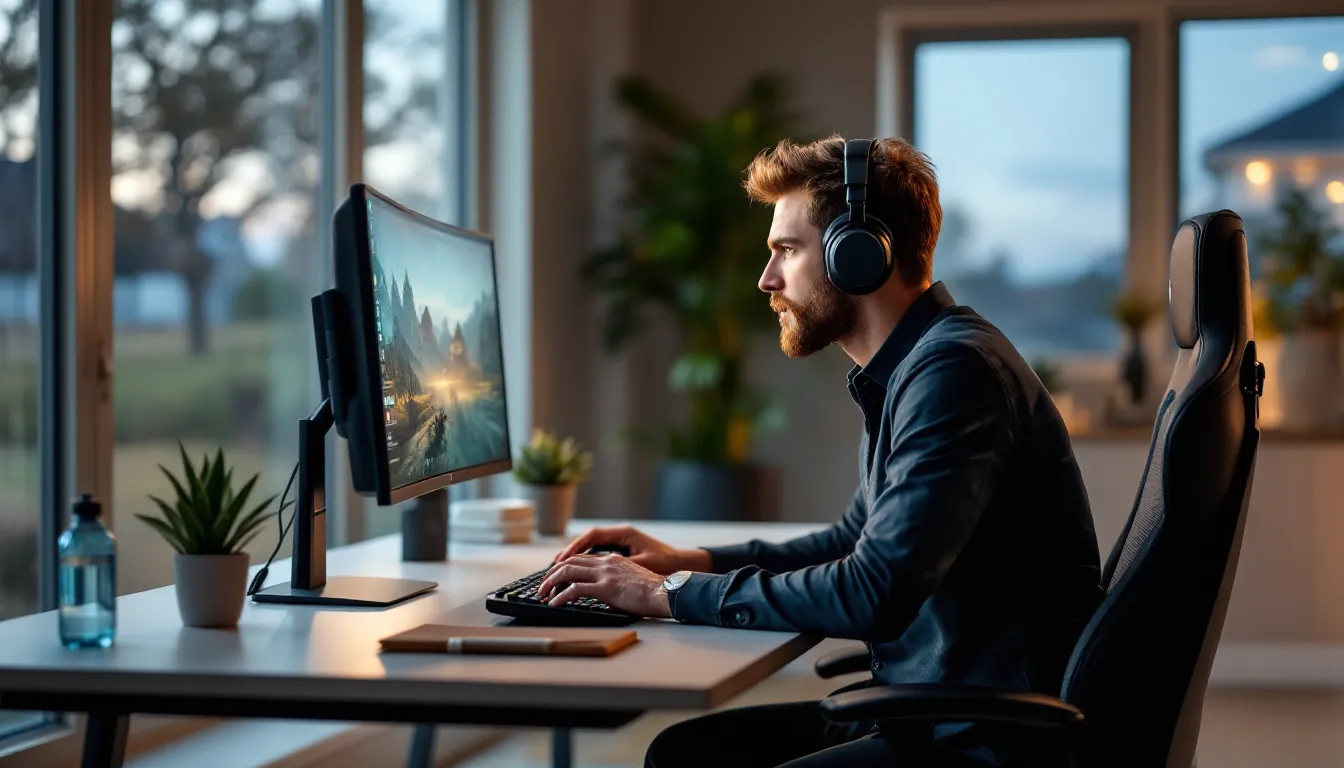
Third, protect your physical setup. A good chair, monitor at eye level, keyboard and mouse at the right height, this matters way more than most gamers think. Esports, Streaming & the covers this in depth. Bad ergonomics don’t just feel bad: they compound into permanent issues over time.
Fourth, separate gaming from other distractions when possible. Phone notifications, Discord streams, YouTube in the background, these fracture your attention and usually extend your session longer than planned because you’re context-switching constantly. Focused gaming sessions, even if shorter, are usually more satisfying than scattered hours.
Fifth, diversify your gaming. If you’re grinding ranked competitive games every single session, you’re reinforcing compulsive patterns. Mix in story games, casual titles, or co-op games with friends. Different game types engage different reward systems. Competitive games are designed to keep you in “just one more match” loops. Story games have natural stopping points. Casual games don’t punish you for taking breaks.
Gaming Schedule Strategies For Different Lifestyles
If you work a standard 9-to-5, front-loading your gaming to weekends makes sense. Five hours Saturday, five hours Sunday, zero on weekdays keeps you under the 10-hour weekly zone and makes it psychologically easier to say no during the week. You’ve got your gaming time blocked and scheduled.
If you work remotely or have flexible hours, spread it out: 1.5 hours in the morning, 1.5 hours in the evening. That keeps gaming integrated but prevents it from being a binge activity that eats your whole night.
If you stream or compete, you’ve probably got a set schedule. The key is still having off-days. Even pro players have scheduled breaks because burnout is real and it destroys performance. One full day off per week minimum. Two is better.
If you’ve got young kids or caregiving responsibilities, you probably need shorter, more flexible sessions. Thirty minutes to an hour before they wake up, or after bedtime. That’s not ideal for long story campaigns, but it works for games with quick-save mechanics, roguelikes, or multiplayer matches.
The universal rule: whatever schedule you set, you need to be able to stick to it consistently. If your plan is “1 hour on weekdays, 4 hours on weekends” but you’re actually doing “skipped all week, 8 hours on Saturday,” that’s not sustainable. You’re setting yourself up for either burnout or breaking the limit.
One more thing: build in flexibility. Some weeks you’ll game less. Some weeks more. That’s normal. What matters is the trend, not the outliers. If your average over a month is healthy, occasional high weeks won’t wreck you. The problem is when high weeks become the normal.
The Benefits Of Moderate Gaming For Adult Mental Health
This is where we flip the script from risk to benefit, because moderate gaming actually does good things for adult mental health.
Studies consistently show that gaming in moderation reduces stress and anxiety. The immersion in a game world gives your prefrontal cortex a break from real-world worries. You’re not thinking about work, bills, or problems while you’re focused on a raid or campaign. That’s genuine mental relief, not escape, there’s a difference.
Gaming also provides structure and achievement. Adults often lack these in their personal lives. Work gives you structure and goals, but it’s externally imposed. Gaming lets you set your own goals, progress visibly, and feel genuine accomplishment. That matters for mental health, especially for people in jobs that feel meaningless or stalled.
Social connection through gaming is huge. Multiplayer games, guilds, raid teams, competitive communities, these are real friendships and social structures. For adults with geographic isolation, social anxiety, or limited time for in-person socializing, gaming communities provide belonging and friendship. That’s not lesser than in-person connection: it’s different, and it’s valuable.
Cognitive benefits are measurable. Games require strategy, quick decision-making, spatial reasoning, and problem-solving. These aren’t passive activities. Moderate gaming, especially varied game types, keeps cognitive function sharp. This matters more as you age, gaming is legitimately protective for cognitive health if it’s not replacing other protective activities like exercise or social engagement.
Finally, gaming provides flow states. That complete absorption where time disappears and you’re fully engaged, that’s flow, and it’s psychologically restorative. Flow states are protective against depression and anxiety. They increase satisfaction with life. Getting into flow regularly through gaming is good for mental health.
The catch: all of this is true for moderate gaming. The benefits flip negative if gaming becomes compulsive or starts replacing other health-protective activities like sleep, exercise, and in-person socializing. More gaming doesn’t mean more benefit. The curve peaks and then goes down. Optimal is probably around 1-3 hours per day depending on life situation, with one or two off-days per week. That’s where the mental health benefits are strongest and the risks are lowest.
When Gaming Becomes Problematic: Recognizing Gaming Disorder
Gaming disorder, persistent, compulsive gaming even though negative consequences, is now recognized by the World Health Organization and showing up in diagnostic manuals. It’s real, it’s not moral weakness, and it’s worth understanding.
The criteria are pretty clear: you’re spending excessive time gaming. You’re prioritizing gaming over other activities. You’re continuing or escalating gaming even though problems it causes. You’ve lost interest in other hobbies or activities. You’re using gaming to escape negative emotions. You’ve lied about gaming time. Gaming is damaging relationships, work, or education.
If several of these ring true, you’re probably dealing with more than just bad habits. This is where professional help is valuable. Therapists who specialize in behavioral addictions can help you understand why gaming became compulsive and rebuild healthier patterns.
The thing about gaming disorder is it’s not about gaming being bad. It’s about loss of control. A person can play 40 hours a week as a professional player and be fine. Another person playing 10 hours a week can’t stop and it’s destroying their life. The hours don’t determine the disorder: the compulsion and consequences do.
Recognizing it early is important because the longer compulsive patterns run, the harder they are to break. Neurologically, reward pathways get reinforced. Psychologically, gaming becomes your primary coping mechanism. Behaviorally, your whole life structure builds around gaming time.
If you’re concerned about gaming disorder, for yourself or someone else, that’s worth taking seriously. Why Long Gaming Sessions explores the physical toll of extended gaming. But more importantly, reaching out to a mental health professional is step one. There’s no shame in that. It’s actually the smart play.
Conclusion
Here’s the bottom line: healthy gaming for adults isn’t about one magic number. It’s about whether gaming fits into your life without crowding out sleep, physical health, work, responsibilities, or relationships. For most adults, that means somewhere in the 1-2 hour daily range, or 7-14 hours per week depending on how you structure your schedule.
But the specific number matters less than the pattern. Consistency, your ability to stick to your limits, whether gaming is replacing something important, and how you feel when you’re not gaming, those are your real metrics.
Research from sources like How-To Geek and Digital Trends consistently highlights the importance of balanced gaming habits alongside proper setup and lifestyle integration. Kotaku’s coverage of gaming culture shows how the industry itself is shifting toward acknowledging that sustainable gaming is better for everyone.
Moderate gaming offers genuine benefits: stress relief, social connection, cognitive engagement, and achievement. But it only works at moderate levels. The compulsive end of the spectrum destroys these benefits and creates harm instead.
If you’re trying to figure out your healthy gaming limit, start by tracking your actual hours, setting a boundary, and testing whether you can stick to it. That honest data beats any general recommendation. If you find you can’t maintain limits even though trying, or if gaming is clearly causing problems, that’s not a personal failing, it’s a signal to get support.
Gaming is genuinely good for adults. But it’s only good when it’s part of a balanced life, not the center of it. Figure out what that looks like for you, set it up intentionally, and you’ll get all the benefits without the downsides. That’s the sustainable model.